

Introduction
Natural light photography is one of the most powerful ways to create images that feel authentic and visually striking. The way sunlight interacts with your subject can dramatically change the mood, depth, and overall quality of a photo. Whether you’re capturing portraits, products, or landscapes, understanding how to use natural light gives you the ability to transform ordinary scenes into something timeless and emotional.
This blog will show you how to see light differently, like noticing how direction, color, and intensity shape every frame. Once you understand its rhythm, the sun becomes the most reliable lighting assistant you’ll ever have.
Understanding Natural Light and Its Qualities
Natural light photography is dynamic. It changes in color, softness, and intensity throughout the day, creating endless creative opportunities for photographers. Here are some types of natural light:
- Soft light is diffused and gentle, often found on cloudy days or during the golden hour. It reduces harsh shadows and creates flattering tones for portraits.
- Harsh light, on the other hand, occurs under the direct midday sun. It produces deep shadows and strong contrast, which can be challenging but also dramatic when used intentionally.
- Diffused light occurs when sunlight is filtered through a curtain, a thin cloud, or a reflector, a favorite technique for creating even, balanced illumination.
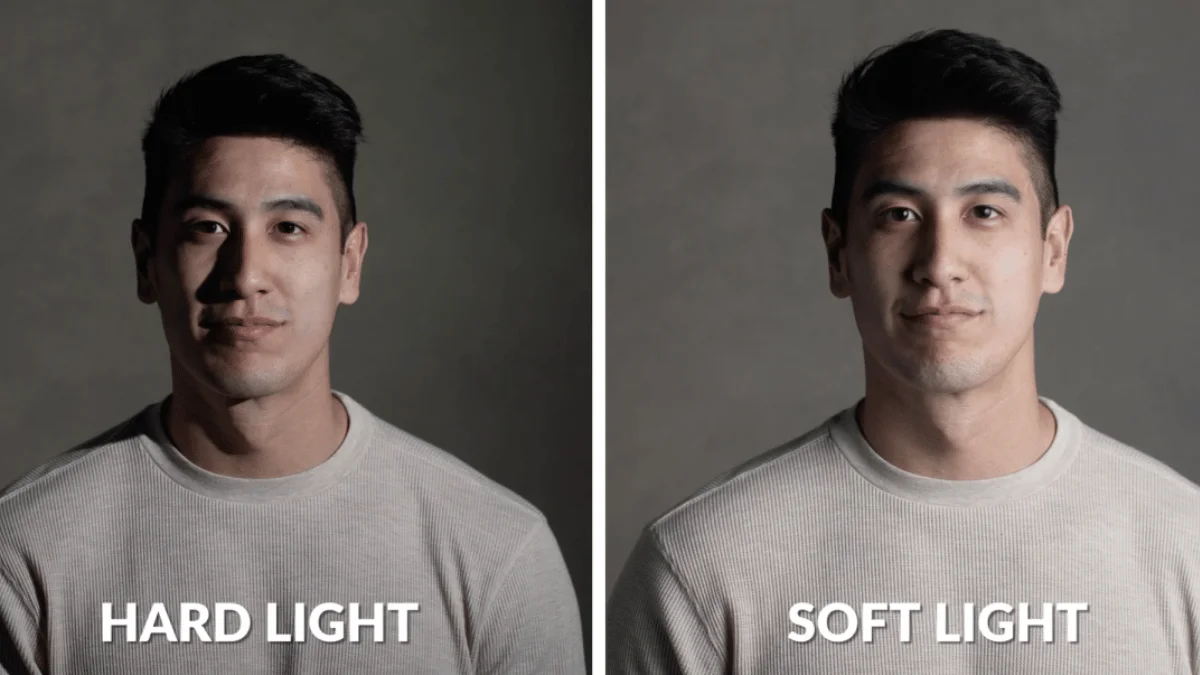
Two different types of natural lighting photography: Hard light vs soft light
The time of day also defines how natural light behaves. Let’s find out the four best times of the day:
- During the golden hour, shortly after sunrise or before sunset, the light is soft, warm, and directional, perfect for portraits or lifestyle shots.
- The blue hour, just before sunrise or after sunset, offers a cooler tone that adds a calm, romantic touch.
- Midday light is bright but harsh, making it best for high-contrast images or when shooting with reflectors.
- Overcast conditions act like nature’s diffuser, softening the light and minimizing shadows, ideal for outdoor portraits and macro photography.
It’s no surprise that photographers often chase the golden hour or look for open shade. These moments naturally flatter subjects, create depth, and bring out delicate tones that artificial light rarely replicates.
Practical Tips for Shooting with Natural Light
Directional Light
One of the most effective ways to add dimension to your photos is by working with directional light. To execute, you should:
- Find light coming from one direction: Directional light adds shape and dimension, making portraits and products appear more defined and expressive. A side-lit setup during late afternoon, for example, can add emotional depth and highlight natural contours.
- Observe and position your subject for suitable lighting: Move your subject slightly left or right to catch gentle side light, place the sun behind them for a glowing rim effect, or use front lighting when you want clean and even illumination with minimal shadows.
>> Read more: Adventure Photography Basics: Tips on Composition, Lighting, and Post-Editing

Position your subject so the light hits from one side
Avoiding Common Pitfalls
Natural light photography isn’t always perfect. You should:
- Avoid dappled light and uneven color casts: Patchy sunlight can create distracting bright spots or mismatched tones. Shift your subject into open shade or use a diffuser to even out the exposure.
- Manage harsh shadows and blown-out highlights from direct midday sun: Overhead light can create deep shadows and overly bright areas. If shooting at noon is unavoidable, use open shade near a building or similar structure to soften the light naturally.

Dappled light filtering through tree leaves can cause uneven tones
Using Reflectors and Diffusers
Reflectors and diffusers are simple tools that can completely change your lighting setup. Here’s how:
- Use simple tools to soften shadows or bounce light onto your subject: Reflectors help brighten the face, fill shadows, and produce a more balanced exposure. Diffusers reduce contrast and soften intense sunlight for smoother results.
- Choose between DIY solutions and specialized gear: White cardboard, foil, or bright walls work as practical alternatives to professional reflectors, while sheer fabrics or curtains can replicate the effect of commercial diffusers for budget-friendly setups.

Reflectors can completely change your lighting setup
Working Indoors with Natural Light
When shooting indoors, position your subject near a window for the most flattering results. Here are some details:
- Position your subject near windows and adjust white balance accordingly: Window light is flattering and consistent, especially from north-facing windows. Adjust white balance settings such as Daylight or Cloudy to keep color tones accurate.
- Use curtains or sheer fabrics as natural diffusers: Thin fabrics soften direct sunlight, creating elegant and even illumination that enhances skin tones and adds a timeless glow to indoor photos.
>> Read more: How to Setup the Right Lighting for Jewelry Photography

Position your subject near a window to acquire the best natural light
Composition and Creative Uses of Natural Light
Natural light photography not only affects exposure, it shapes how a story unfolds in your frame. Here’s how:
- Move your subject to explore different lighting angles: Changing a subject’s position even slightly can create surprising variations in tone and depth. A step to the left or right can shift the shadows, reveal new highlights, or soften contrast.
- Experiment with backlighting to create rim light and mood: Positioning the light behind your subject produces a gentle glow around the edges, often called rim light.
- Use natural light to highlight textures and strengthen storytelling: Textures become more defined when light hits them at an angle. Sunlight grazing across fabric, skin, foliage, or handcrafted objects can reveal details that feel tactile and expressive.
- Adjust camera settings: Natural light changes quickly, so adapting your settings is important. A wider aperture can create a soft background and draw attention to your subject, while spot or center-weighted metering helps maintain proper exposure when dealing with bright highlights or deep shadows.
>> Read more: The Ultimate Guide to Utilize Lifestyle Photography for Beginners
Post-production Tips for Enhancing Natural Light Photos
Even the most beautiful natural light photos benefit from gentle post-processing. You can follow some useful tips below:
- Make basic corrections for exposure and white balance: Start by adjusting overall brightness to ensure your highlights and shadows look balanced. Correcting white balance helps maintain accurate color tones, especially in scenes influenced by warm sunset light or cool indoor window light.
- Emphasize natural shadows and highlights without overprocessing: Enhance the depth created by natural light by gently lifting shadows or refining highlights, but avoid pushing the image too far. Preserving authentic contrast helps maintain a timeless and realistic look.
- Use AI-assisted editing to refine natural light photography: AI-powered tools like Photoshop or Canva can speed up correction workflows and improve color accuracy, texture clarity, and tonal balance while keeping the natural feel intact.
>> Read more: How to Take a Good Photo: 8 Practical Tips for New Photographers
For professional results, you can explore Innovature Studio’s AI-assisted photo editing services, designed to enhance your natural light photography while keeping the original atmosphere intact.
Conclusion
Natural light photography has the power to transform and turn simple moments into lasting memories. By learning how to observe and control it, you gain creative freedom and technical confidence. Every sunrise, every cloudy afternoon, every reflection on a window offers a new chance to experiment and grow.
For those ready to elevate their work even further, professional editing can bring out the best in every image. Contact Innovature Studio’s photo retouching team to refine your natural light shots with precision, balance, and help you achieve photos that feel as beautiful as the moment itself.